
Consider whether you understand how leverage works before committing funds.
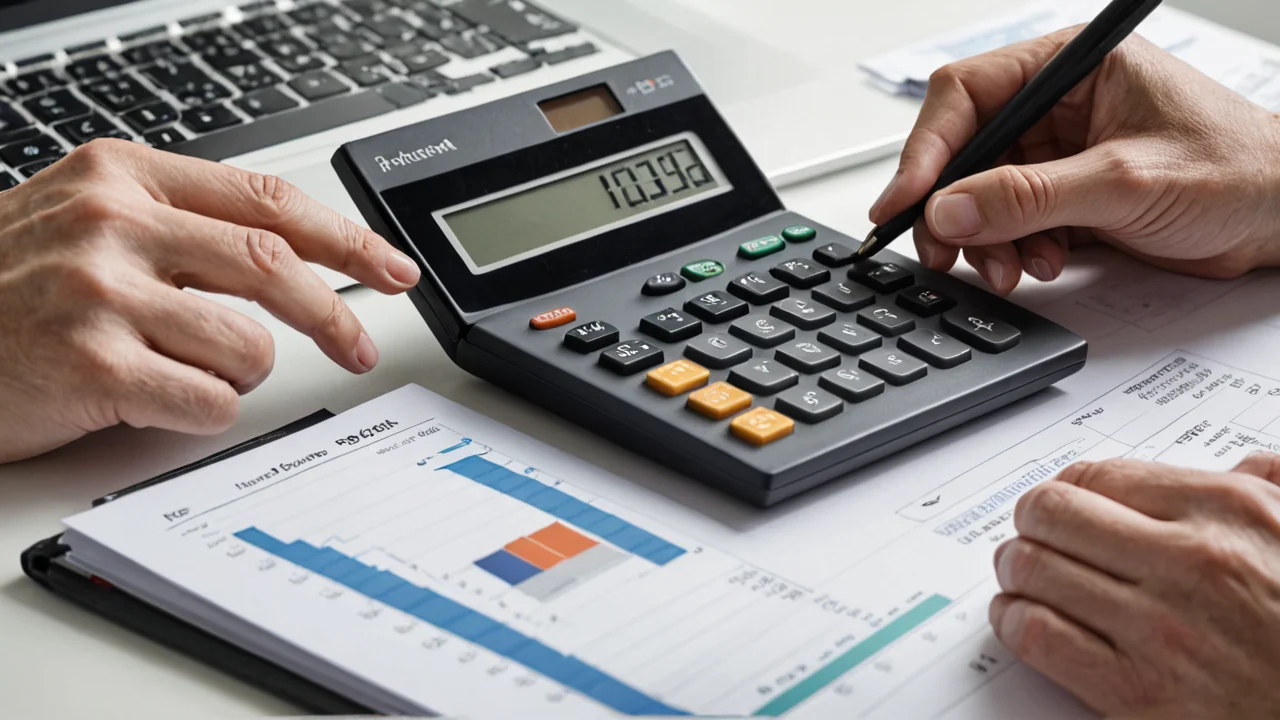
Pip stands for "percentage in point", and on the SMC Global Securities currency desk it is the fourth decimal place of an INR-based pair, so the pip is the smallest standard step a quote moves. That single definition decides what your calculator has to do next. It has to translate a move of one pip into rupees for the specific contract you hold, nothing more.
We are an independent editorial desk that reviews brokers against market norms. SMC Global Securities is a SEBI-registered domestic broker, a member of NSE, BSE, MCX and NCDEX, and a DP with both NSDL and CDSL, so everything below sits inside the exchange-traded framework Indian residents actually use.
Pip Value in Rupees
For most pairs quoted to four decimals, one pip is 0.0001. The rupee value of that pip depends on contract size, the pair, and the exchange rate, not on the platform you type the numbers into.
Use this order when you build the figure yourself:
- Note the contract size for the pair on NSE, BSE or MSE.
- Multiply contract size by 0.0001 to get the pip in the quote currency.
- Convert the quote currency to INR at the current rate.
- Divide by the USD/INR rate if the pair is quoted against the rupee.
On an INR-quoted pair the conversion step disappears, which is why domestic traders find pip maths simpler than their offshore counterparts do.
Pips Across Our Instruments
The pip is not a universal unit. Equity, futures and options, commodities and mutual funds on this platform are priced and settled in rupees, and a "pip" only appears when you trade a currency pair or a cross-currency derivative.
| Instrument | Pip unit | Practical note |
|---|---|---|
| INR currency futures | 0.0001 | Settled in INR, no FX step |
| Cross-currency futures | 0.0001 | Two conversion steps |
| Equity and F&O | Not pip-based | Tick size applies instead |
| Commodity | Not pip-based | Tick size applies instead |
| Mutual funds and IPO | Not applicable | NAV and allotment pricing |
The practical consequence is straightforward. If your traded instrument does not carry a pip unit, a pip calculator has nothing to calculate, and the tick value is what you should be looking at.

What the Calculator Does Not Cover
A pip calculator answers one question and silently skips several others. On the SMC Easy Trade and SMC Ace Web terminals, position size, margin blocked and brokerage are all shown separately, so treat the pip figure as one input rather than the answer.
- It does not net off brokerage: around 0.30% on delivery, or Rs 20 per trade on the flat plan for intraday and F&O.
- It does not model SPAN plus exposure margin, which is what actually blocks your capital.
- It does not estimate tax treatment, which differs between speculative intraday and non-speculative positions.
- It does not adjust for the AMC of roughly Rs 300-450 a year, which is nil in the first year.
Where the Market Sits
Most retail brokers now offer a pip or position-size calculator inside the web terminal, and SMC Global Securities is no exception. The difference sits in what the calculator is attached to.
| Dimension | SMC Global Securities | Typical offshore broker serving India |
|---|---|---|
| Base currency | INR | USD, EUR |
| Regulator | SEBI | Varies, often offshore |
| Currency pairs | INR-based plus permitted crosses | Wide spot forex and CFD list |
| Settlement | INR, no conversion | Conversion at broker rate |
| Funding rails | UPI, net-banking | Cards, crypto, some UPI |
If you are weighing a strictly regulated international broker against a domestic one, the criteria that matter are consistent across both: a strong regulator such as FCA, CySEC or ASIC, segregated client funds, transparent commission schedules, a long track record, and support you can actually reach. Apply those five tests and the comparison stops being about branding.

The Part Nobody Advertises
The subtlety here is regulatory, not technical. Under FEMA, Indian residents may trade only INR-based currency pairs and permitted cross-currency derivatives on SEBI-recognised exchanges. Trading spot forex or CFDs with offshore brokers sits outside that framework, and remitting money abroad for margin forex is not a permitted LRS end-use. That matters less as a warning and more as a filter: it tells you which pairs a pip calculator on your screen is even allowed to describe.
There is a second, quieter limit. Comparing pip values across brokers is only meaningful when contract sizes match. Two platforms can quote the same pair and return different rupee-per-pip figures because one is a futures contract and the other is a CFD on the same underlying.
On the cost side, SMC Global Securities charges an account opening fee of Rs 0, delivery brokerage near 0.30%, and Rs 20 per trade on the flat plan for intraday and F&O. There is no verified minimum funding requirement, and the platform line-up covers SMC Ace Web, SMC Easy Trade on web and mobile, and SMC Privilege on ODIN DIET.
Pips and Your Tax Bill
Most pip calculators stop at the rupee value and leave you to work out the rest. In India, the classification of the trade changes the tax treatment, so knowing whether your position is speculative or not is worth more than the third decimal in your pip figure.
| Position type | Tax treatment | Loss carry-forward |
|---|---|---|
| Intraday speculative | Speculative business income | 4 years, speculative only |
| Exchange-traded currency F&O | Non-speculative, slab rates | 8 years |
| Delivery equity | Capital gains | Per holding period |
The Income Tax Department, under CBDT, is the authority here. Residents also declare worldwide income and foreign assets under Schedule FA. A 20% TCS applies on LRS remittances above Rs 10 lakh per financial year, and that TCS is available as an advance-tax credit.
Reading Pips as a Skill
The gap between a beginner and an experienced trader on this page is not the formula. It is knowing which number deserves attention.
For someone starting out, the pip in rupees turns an abstract price move into a concrete gain or loss, and that alone changes position sizing. For someone who has traded for years, the pip figure is a check against the margin blocked under SPAN plus exposure, and against the brokerage line that eats into a small move.
Two things repay attention regardless of experience. Confirm the contract size before you trust any calculator output. And check whether the pair you are pricing is one of the INR-based pairs permitted under the exchange framework, or a cross-currency derivative.


Questions worth answering
What is a pip in simple terms?
A pip is the fourth decimal place of a currency pair's quote, equal to 0.0001 for most INR-based pairs on NSE, BSE and MSE. It is the smallest standard unit of price movement, and its rupee value depends on contract size and the exchange rate.
How do I calculate pip value for USD/INR?
Take the contract size for the pair, multiply by 0.0001, and the result is already in rupees because the pair is INR-quoted. If you are trading a cross-currency derivative, convert the quote currency to INR at the prevailing rate before applying the figure.
Why does my pip value differ between brokers?
Contract size is the usual reason. An exchange-traded currency futures contract and an offshore CFD on the same pair can carry different notional values, so the same one-pip move produces different rupee outcomes. Compare notional first, then pricing.
Is a pip calculator enough for position sizing?
No. It covers price movement only. Margin blocked under SPAN plus exposure margins, brokerage at roughly 0.30% on delivery or Rs 20 per trade on the flat plan, and AMC of Rs 300-450 a year all sit outside the pip figure and all affect the outcome.